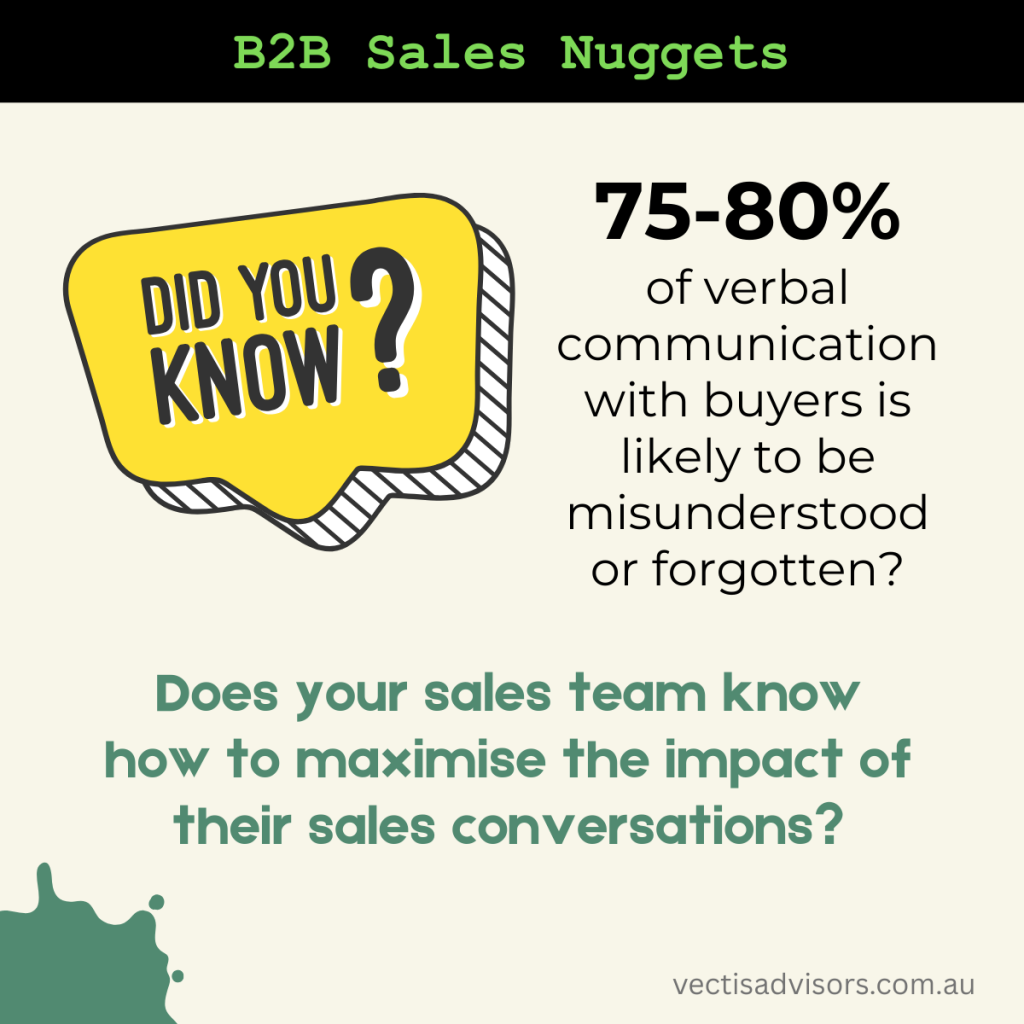
Shocking! Isn’t it. Other people don’t remember exactly what we tell them.
B2B selling and the curse of knowledge
For B2B sales teams, especially those who are considered to be specialists or experts in their industry, this can be a problem due to the tendency for them to focus on quickly solving problems for customers (rather than fully listening), and the ‘curse of knowledge’ effect.
The curse of knowledge is a recognised cognitive bias where we incorrectly assume that everyone knows as much as we do. It also means that once we have knowledge it can be very difficult to imagine what our thoughts were like before we had that knowledge.
And so – as an expert or specialist – it’s easy to assume the deep knowledge you hold, or at least some of it, is also commonplace among your customers. And maybe you don’t even consider the implication of that as your knowledge is second nature to you (it’s like an automatic reflex, it’s just there when you need it).
Listening skills are sales tools
Often aligned to the curse of knowledge is the lack of deep listening skills. Commonly referred to as ‘active listening’, the use of these specific skills (I often call them listening tools) has a two-fold impact.
Firstly, they encourage the customer to expand on their response by demonstrating you want to know more and by providing space (both mental space and time) for the customer to fully explain their thoughts.
Secondly, it gives you – as the seller – some time and importantly extra details for you to consider the most appropriate response or solution.
Jumping to solutions
Too often, sellers who are ‘experts’ are keen to solve the problem, provide an answer, and apply their expertise. They want to help their customer. They’ve usually heard the same symptoms, problems or challenges many times before and can easily jump to offer a solution.
⚡ But is that the best thing to do?
⚡ Does the customer believe you truly understand the complexities of their situation?
⚡ Have you missed receiving some important information that might lead you to offer a different path forward?
Sometimes it can be most productive to slow our conversation and be sure we’ve gleaned all the relevant information from the customer before we move ahead and explain more about how we can help.
Focus on encouraging the customer to explain more. Then you can anchor the information you provide to those specific requirements.
And even though we might explain everything to the customer, verbal communication is difficult to remember.
Studies in the communications field show the majority of verbal information is quickly forgotten or misunderstood. It’s just how our brains work. But anchoring our information to specific needs of the customer can help.
So, telling your customer more and more won’t necessarily make it stick any better. Instead, make it more impactful and follow it up in writing.
Stuart Ayling
How to make your sales conversations more effective
1️⃣ Firstly, maximise the impact of your sales conversations by being self-aware and encouraging the customer to talk more (using appropriate questions) rather than you doing all the talking.
2️⃣ Secondly, use carefully curated and authentic messages and sales stories that show the impact of your solutions for customers. Make it something they will remember.
3️⃣ Thirdly, consider how you could follow up verbal communications (whether in person or over the phone) with some written confirmation of the key points. Include a recommended next step or call to action to create momentum.
Need more?
If you find your team needs specific guidance and training to develop the right mindset, skills, and sales conversation strategies you’re welcome to get in touch to discuss options.

About the author
Stuart Ayling MIMC, BBus, GCM holds a Bachelor of Business (Marketing) and a Graduate Certificate in Management (International Business). He is an experienced strategic planning facilitator/consultant, and trainer in business-to-business sales, critical thinking skills, and management skills. For over 20 years he has been engaged by a wide range of national companies, regional firms, and founder-led businesses across Brisbane, Sydney, and Melbourne. He is also a full member of the Institute of Management Consultants (Australia).