When it comes to implementing the initiatives from strategic planning many business leaders and their teams get bogged down with deciding how to prioritise the goals they have agreed on.
Sound familiar?
Every department, team leader, or stakeholder has their own idea on what’s important (especially for them).
And there’s always some limitation on resources. No-one ever has enough.
Plus there’s business-as-usual to contend with, which often takes top priority and most of the attention once the planning sessions are over.
Strategic planning using the ICE framework
One of the tools I’ve found helpful is for the leadership team to use the ICE framework (Impact, Confidence, Ease). It enables a more rational consideration of what is achievable.
I like to think of the ICE framework as a more advanced version of the commonly used Impact-Effort matrix. One of the limitations of the original Impact-Effort matrix is that the categorisation process doesn’t really account for how confident you are that it will/can be achieved.
For example, just because a goal seems easy or low on the Effort scale it doesn’t mean it will actually be done or that the Impact will be achieved.
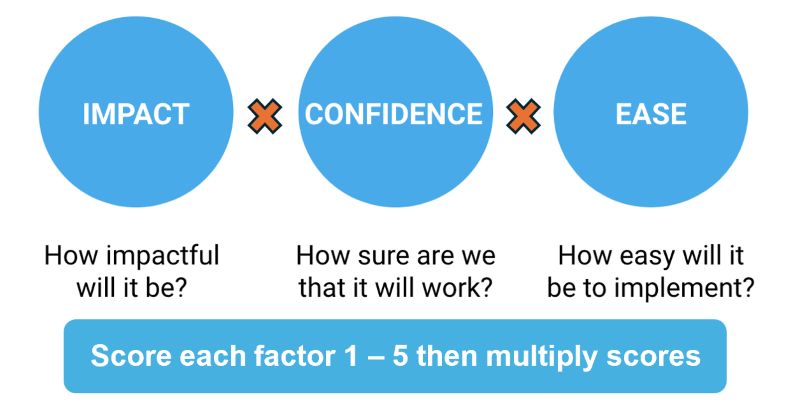
However, the C in the ICE framework (for Confidence) is a bit of a reality check and can shift the priorities once it is considered.
Get the ICE Framework worksheet
If you’d like a copy of the ICE Framework Worksheet to use with your team please get in touch.
A note of caution:
Remember the decisions made within any model are somewhat subjective. You and/or your team are making decisions and choices based on your existing mindset, current knowledge, and previous experiences.
That’s why it’s good practice to pause and reflect on how you may be able to validate or cross-check the assumptions behind the scores you attribute to each factor. Applying some critical thinking methodology to your strategy decisions may unearth some previously overlooked considerations.

About the author
Stuart Ayling MIMC, BBus, GCM holds a Bachelor of Business (Marketing) and a Graduate Certificate in Management (International Business). He is an experienced strategic planning facilitator/consultant, and trainer in business-to-business sales, critical thinking skills, and management skills. For over 20 years he has been engaged by a wide range of national companies, regional firms, and founder-led businesses across Brisbane, Sydney, and Melbourne. He is also a full member of the Institute of Management Consultants (Australia).